Friday, June 9, 2017

Stuttgart an industrial legacy city in Germany

Stuttgart, Germany, is the largest city of a industrial region with a long stagnating and now slowly growing  population of about 607,000 in a 2.7 million people region. It is known for having the dirtiest air in Europe but also for having vineyards directly next to the the main train station and maintaining and excellent park system to meticulous standards.
Stuttgart Schlossplatz: City Tours (Photo Philipsen)


As the "cradle of the automobile", where Gottlieb Daimler invented the car, and where the Mercedes factory of Daimler-Benz and Porsche are still made today, Stuttgart is Germany's mo-town.

Those much loved cars are the reason for the bad air (especially fine particulates) and cars and trucks flow through Stuttgart in great numbers on two large national roads bisecting the city like coordinates, and autobahns circling it. Since the place isn't flat but located in an elongated valley that traps the bad air in a kind of cauldron roads wind up the steep hills and don't form a grid.

European cities rarely have a uniform grid pattern, the much more irregular system doesn't have the redundancy of a grid, resulting in more congestion. Stuttgart will prohibit older Diesel vehicles from operating in the city under smog conditions starting next year. That hits a German city hard where about 60% of all cars have diesel engines and where that fuel type has a lower tax rate than gasoline. The German car industry is now trying to catch up with hybrid and electric propulsion because for too long they thought the frugal diesels (50mpg) could get  them through the California Standards. As the VW diesel scandal shows, this was only possible through fraud. While US VW diesel customers get large settlements pay-outs, German buyers so far have gone empty.
Stuttgart Marktplatz: Fully rebuilt after WWII with
 unremarkable architecture

Stuttgart saw a huge influx of rural residents and war refugees in the postwar boom years. Bursting out of its cozy pre-war confines urban renewal finished off the historic places that Allied air raids had not managed to destroy before. More than Baltimore Stuttgart lost its architectural integrity this way.

Even with the recent decades of emphasis on rehabilitation and restoration, historic buildings are just small islands in a sea of various phases of modernist architecture.

The automobile and suburban sprawl Stuttgart didn't drain the city in the same way as it did Baltimore, but Stuttgart is like Baltimore surrounded by prosperous and exploding suburban communities, one of them even managed to finagle the Daimler Benz headquarters into its jurisdiction. This was a special blow to Stuttgart at the time since the tax base of German cities is largely commerce and not property taxes.But de-industrialization never reached US proportions, the State of Baden Wuerttemberg is still seen as the center of tinkerers and inventors with many internationally known manufacturers located in here.Interestingly, the State currently has a Green Party Ministerpraesident (Governor) and Stuttgart also a Green Party Mayor.

As it was common in the US, Stuttgart's center city was for a long time zoned only for retail and office with very few people living where they worked. This began to change in the 1970's when planners complained about the 9-5 downtowns which turned into ghost-towns every evening. I was involved in one of the early undertakings to bring housing back to downtown when hundreds mixed income townhouses were erected on top of an underground parking deck in a mews type development a stone-throw from city hall.

Since then there has been more residential development but not to the extent as we see it in Baltimore and US cities. Adaptive reuse of office buildings or old warehouses and factories into apartments is rare. An early conversion of a centrally located factory campus was the new use of the old Robert Bosch headquarters. Buildings were initially adapted to university uses but since include a host of uses which now form a creativity and lifestyle (Erlebnis) hub. Stuttgart keeps re-inventing itself with large redevelopments including redevelopment of freight track areas which are becoming the Euro-quarter, the Dorotheenviertel, a mix of high end retail, hotel, offices and housing, Berliner Platz (new housing) and the redevelopment of the old congress center area on the posh Killesberg.
Historic Stiftskirche: Restored after the war
(Photo Philipsen)


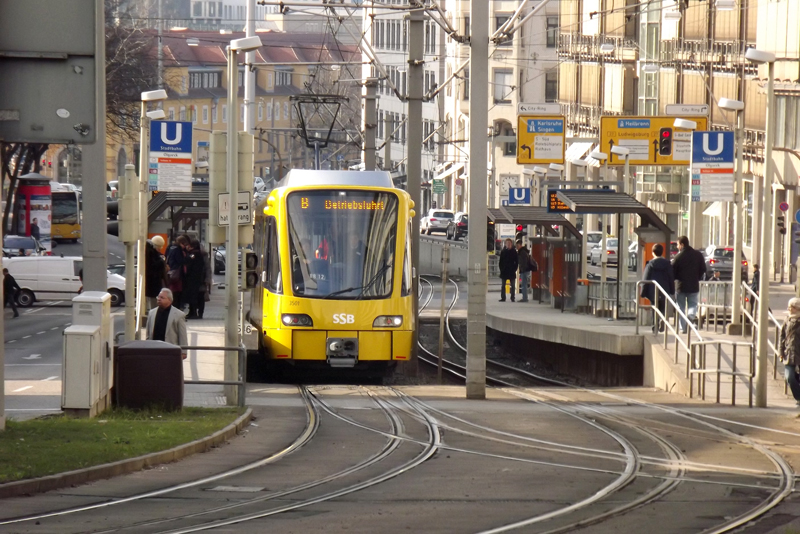
Unlike Baltimore, Stuttgart kept the main lines of its vast streetcar system running, even when the automobile took over with expressways, parking garages and electronic guide systems showing where the nearest open raking spot is to be found. When the first oil crisis hit in the 1970s, and cars clogged up the city center especially on big shopping days, a big move to improve transit was made: The narrow gauge small streetcars were upgraded to full size subway type vehicles running in dedicated spaces usually in the median of major streets. In downtown all streetcar lines were put into tunnels with a large underground transit hub in front of the main train station.

Today the system is a reliable, high capacity way to get around in the entire region, typically with head-ways between 6 and 10 minutes. Fares are based on zones and can cost as much as $3.20 a trip if using single ride tickets. An extensive bike share system is operated by German Bahn, the federal railroad.

Today, most of downtown is car free with an extensive network of pedestrian malls, downtown shopping arcades and outdoor eating. The Stuttgart region does most of its brick and mortar shopping still in the center city and not in suburban malls or shopping centers which remain rare.

Unlike Baltimore, the State can hardly disrespect Stuttgart, since the city is the seat of the State government. Although Baden Wuerttemberg is a larger State than Maryland and has several other metro areas including Karlruhe, Mannheim, Freiburg and Ulm, all cities with their own universities and cultural institutions, Stuttgart has been and remains the cultural center with many museums, a symphony, an opera and a ballet troupe. Far from being a rust-belt city whose best times lie in the past, Stuttgart today is like Munich a hub of innovation, high tech and advanced specialty manufacturing attracting migration inside Germany and inside Europe.
Transit on a car centric artery towards the suburbs (Photo Philipsen)

Race relations never played much of a role since the State was much more homogeneous than the US ever were. This changed when guestworkers came to assist in the  post war economic miracle of the Wirtschaftswunder. Today the city is home to large contingents of Italians, Yugoslavs (from the time when there still was such a country) and Turks. Over 40% of residents have a foreign origin (twice the national average) with an even higher percentage of children. Without foreigners Stuttgart wouldn't be any longer a manufacturing hub and would be a markedly smaller place. Tensions arose only from the Turkish immigrant group because they were largely Muslims and brought a different culture and recently also from the strong influx of refugees. As in the US, large cities are mostly liberal or progressive while right wing policies concentrate in rural areas or in disinvested towns of the former East Germany.

The murder rate of Stuttgart is so low that it is hard to even find crime statistics. In 2004 Stuttgart was Germany's safest city, in the meantime Munich has taken that spot. still, Stuttgart's has murder rate is in the single digits somewhere between zero and seven per year.

Klaus Philipsen, FAIA

Redevelopment Berliner Platz: Wohnen in der Innenstadt

Bosch buildings adaptive reuse

Redevelopment Stuttgart Killesberg: International participants (Photo Philipsen)

new development Dorotheenviertel (Photo Philipsen)

Stuttgart, between innovation and traditionalism (Photo Philipsen)

Modernized streetcars (Stadtbahn) in the median of streets with high platforms

Underground Stadtbahn stations downtown

The book, Baltimore: Reinventing an Industrial Legacy City is my take on the post industrial American city and Baltimore after the unrest. 
The book is now for sale and can currently be ordered online directly from the publisher with free shipping. 


Thursday, June 8, 2017

The Upton lesson

How wrong simplistic wholesale rush judgements of distant suburbanites often are regarding inner city neighborhoods, was on vivid display last Friday at the regular monthly meeting of the Upton Planning Committee .
Upton: History and activism

No question, Upton, named after the Upton Mansion, is a difficult community in which to live. With a median household income of $17,000 (2015), under 1/3 homeownership, 300 vacant properties, 60% of the children living in poverty, 25% unemployment and a 73% population loss since 1940  the residents of Upton and a few immediately surrounding communities the neighborhood is one of the most disinvested communities in Baltimore. But the Upton Improvement Council highlights a neighborhood of pride, of historic buildings including the historic Marble Hill neighborhood, a community which includes 7% of households with an income above 75,000 and a neighborhood that some 10,000 adults and children call home. considered to "just bulldoze the whole place".

Instead the Upton Planning Committee secured funds from Wells Fargo to prepare a realistic 2026 masterplan and crunches data together with Wells Fargo.
We are striving to make the Upton of tomorrow a different place. The first step is to inspire ownership and pride in the community by renovating places of historical value. (website)
Jules Dunham Howie of the Upton Planning Committee ran the Upton Community Developer Meeting in a very upbeat manner. First she provided an update on the status of the masterplan. Shortterm goals include reduction of the number of absentee landlords and the increase of homeownership. Howie mentioned the 30 churches in the community and how after 2pm on Sunday all the congregation members vacate Upton for the suburban communities they now call home. Wouldn't it be a good place to start to find additional homeowners for the community?
Bethel AME Church
Introducing the update on developments in Upton she explained that the community seeks to screen developers as a condition before supporting them vis a vis Baltimore Housing for example if they want to rehab houses as part of Vacants to Value. "We just don't want to hear ideas" she said, "we want to know how you fund your project". If a project is not funded, "guess what?", she continued, "the lots or buildings are just sitting there doing nothing for the community".

A community hub proposed on Pennsylvania Avenue by Intersection of Change, a West Baltimore Group headed by Sandtown resident C.W. Harris who is often called "the mayor of Sandtown" is an unfunded projected. However, a feasibility analysis was paid by the Abell Foundation and the architect Davin Hong of LDL was allowed to present a schematic design to hear a response from the assembled community members about the proposed program of community spaces, offices, small retail and workforce training and a workforce center to connect jobseekers with
Upton map
jobs.

Other developers who want to rehab vacant houses were at the meeting to see how the community project screening process works. They were allowed to introduce themselves but will present their project next month once they have more detail.

In the current year $600,000 of project Core money went to 17 projects in Upton based on a slew of applications, some related to "main street" (Pennsylvania Avenue). Another funding round for State money is due June 8 this year with four additional applications form Upton. Upton's Main Street coordinator is Marion Blackwell. The area around the Avenue Market and its Upton Metro Stop is lively with many small shops open, people running errands and some, no doubt, selling illegal items. The Avenue Market is part of an ongoing development RFP that potentially opens the market to a private developer. Any proposals are not yet public and under review.
Crowds at the Royal theater in the old days

Being in the community on a regular base (ArchPlan is a participant on the LDL team and also on the nearby Sphinx Club renovation) and speaking with the leaders of the organizations and with the community members who live or work in the area, it becomes abundantly clear that even disinvested communities in Baltimore are still full of people who care, full of culture, heritage and people making a living, students going to school, residents who practice or learn art or aspire to getting new skills, in short, everything that characterizes every neighborhood in Baltimore. The the idea one often hears from people outside the City that "those" neighborhoods should be simply abandoned, services cut off and be bulldozed as a park or future community is patently absurd.
Wanda Best, President Upton Planning Committee 

Working with the pride and talent in the community on a systematic rebuild is an honor. Improvement, while very difficult, is also very possible if the forces and resources align around a consensus strategy.

Klaus Philipsen, FAIA

Masterplan goals
From the Upton Planning Committee Website
due to travel articles will be less regular inthe coming days

Tuesday, June 6, 2017

Bombshell: Administrator leaves MTA 2 weeks before new bus launch

In an discomforting bombshell development MTA Bus Administrator Paul Comfort was either fired or left his post on his own accord, at any rate his departure is extremely sudden and a complete surprise.

Comfort has put his name on MTA and the bus reform BaltimoreLink like no other. He was the system overhaul's chief promoter and salesman, his fate clearly riding on the success of the operation. Just a day earlier Comfort posted a promotional video advertising his scheduled talk at the BWI Partnership on June 14. He was also seen with Governor Hogan at a "Responsive Government" luncheon with 700 State business leaders on Monday.
Paul Comfort inspecting progress on the West Baltimore bus hub last week.
The hub is to be in service June 18

The extremely sudden departure was announced by Transportation Secretary Rahn Tuesday. No explanation was given. Also leaving the MTA was Jim Knighton, MTA's chief of staff and Comfort confidant.

Kevin Quinn who is the chief organizer of Baltimore Link and the head of the MTA Planning Department has been named as acting Administrator. He is very well liked by all who ever dealt with him.

Obviously, the departure of Comfort so shortly before his signature project, Baltimore Link is to be launched on June 18 sends
Kevin Quinn (photo: Philipsen)
a terrible message, no matter what specific circumstances will emerge regarding Comfort's dramatic departure, whether he had a sudden fallout with the Secretary or whether he suddenly bailed.
Comfort with Governor Hogan on Monday

Paul Comfort's unconventional style and his enthusiasm were a welcome departure of the stodgy leadership previous Administrators have exhibited. However, it has becomes evident at various junctures, that Comfort's enthusiasm for better transit at MTA required resources and decisions that he didn't always get from his boss, Secretary Rahn, who is much less excited about transit, Comfort was also rumored to have ambitions beyond being Administrator although it wasn't clear which ambitions. The Washington Post quoted Comfort as saying:
"It was a pleasure to serve Gov. [Larry] Hogan and the MTA, and I enjoyed my time there, It appears I’m on to the next thing. I’ve got numerous options. … I wish everyone the best.”
Limited resources are a problem that could hobble the new BaltimoreLink system which is largely a reimagined bus operation with the existing fleet of vehicles and operators.

The bus reform is tailored after the bus overhaul Houston launched earlier. The big difference is, that Houston's bus system had the relief of two new light rail lines that opened with the bus launch giving the bus system the relief it needed to be successfully re-imagined. Secretary Rahn, by contrast, famously killed the planned Baltimore Red Line instead.

Klaus Philipsen, FAIA

Baltimore SUN article about Comfort's departure
MDOT Press Release
WBAL report


Monday, June 5, 2017

How a judge can mess with transit

Its not easy to agree with Governor Hogan on transportation, but he has a point in his criticism of a federal judge who is messing with the Purple Line.
...even with federal funding, we can’t move forward because of a judge who lives at a Chevy Chase country club (Governor Hogan in April 2017)
Purple Line: Stop work order issued
The judge has become front and center in the matter of a lawsuit filed in 2014 by two Town of Chevy Chase residents—John Fitzgerald and Christine Real de Azua—and the trail advocacy group Friends of the Capital Crescent Trail. The opponents of the Purple Line contend that the  Environmental Impact Study (EIS) is flawed. An EIS is a requirement under federal environmental (NEPA) laws from the 1970's. U.S. District Judge Richard Leon agreed in November last year that the Federal Transit Administration (FTA) must consider the safety and ridership problems faced by the nearby Washington Metro transit system as part of the environmental analysis of the Purple Line. The judge ordered FTA to consider whether or not Metro’s struggles required the agency to undertake a lengthy and time-consuming supplemental environmental impact statement (SEIS). FTA concluded the SEIS was not warranted.

Then in May of this year the same federal judge upheld his earlier opinion even after FTA clarified the ridership issue. Judge Richard Leon wrote his decision was based solely on how declining Metro ridership and recent Metro safety issues might impact projected ridership for the Purple Line, a 16-mile light-rail that’s separate from Metrorail but that would include stations near or at several Metro stations. FTA maintains that ridership forecasts are sound.
After Metro’s struggles are accounted for, the Purple Line would attract 67,000 daily riders by 2040, they estimated. Even if there are no transfers between Metro and light rail, the FTA said, it would still be “one of the most robust light-rail systems” the agency has ever funded. (Streetsblog)
The second ruling allows MTA or the State of Maryland to appeal the decision or to conform. Either way, it would further delay the final federal funding agreement which had been imminent last year when the judge's first ruling came three months after the federal government had approved the final EIS.
“Moreover, the judge’s concerns were thoroughly addressed by federal transit officials by studies already completed and in public testimony more than five months ago. Ultimately, this ruling completely ignores both federal and state transportation experts, as well as environmental advocates, who are strong proponents of the Purple Line.
This is not a political issue – it’s an important transportation and transit priority for Maryland and the region that has strong bipartisan support. The state will continue to pursue any and all legal action to ensure that the Purple Line will move forward.” (Statement by Governor Hogan on May 22, 2017)

The Maryland Attorney General’s Office said it would appeal a May 22 ruling. With a suspended EIS the feds cannot fund the project nor can construction, originally scheduled to start late 2016, finally begin. With the volatility of federal policies under the current administration, the delay could mean that the promised $900 federal contribution for the 16.2 mile Purple Line project could disappear. So far Congress has appropriated $325 million which tye State can't access now.
If the federal funds would be reallocated to other projects the $6 billion Purple Line would be dead, since the State has set aside only a small contribution drastically scaled back from the original over $700 million envisioned under Governor O'Malley.
The Purple Line: Not part of WMATA's Metro but connecting it

The MTA contends that the State had to spend $312 million on planning, real estate and permitting costs, while not receiving federal or local reimbursements for the work. "Even though the design is the responsibility of the concessionaire, MTA is still on the hook for millions of dollars a month in oversight, financial management, FTA reporting, submittal reviews, and right of way acquisition" explains former Purple Line project Director Henry Kay who now works in the private sector and is no longer associated with the project.

Running out of funds, State Transportation Secretary Pete Rahn ordered the state’s private partner on the P3 project, Purple Line Transit Partners, suspend the execution of new construction contracts and the procurement of non-essential materials and equipment as well as to freeze hiring of construction staff.
Rahn also asked the Maryland Transit Administration (MTA) to freeze hiring of oversight staff for the project and suspend state funding for county design reviews. “All parties are directed to limit the obligation of further costs for the Purple Line project to those of agreed necessity,” Rahn  said in a statement.

The fact that the Purple Line is set up as a public private partnership (P3) further complicates the matter. The State is on the hook for the environmental impact statement. Cost increases from the delay cost the State,  a potential failure of the project would bring about complicated claims by the private consortium for all kinds of losses. As the P3 is structured, the private side would take on risks associated with engineering problems or delays during construction but not those going back to the phases of the project conducted by the MTA.
Judge Leon

Even if one wouldn't want to share the Hogan's personal attacks on the federal judge which included the location of his residence and his wife's membership in a country club, several aspects of the judge's rulings are disturbing and go to a much bigger issue than Hogan's transportation policies or the judge's personal associations: The bigger issue is how NIMBY type opponents have turned the National Environmental Protection Act (NEPA) into their favorite tool for frivolous law suits turning NEPA into one of the most unwieldy elements in the approval process of large infrastructure projects the country needs so badly. In the case of the Purple Line the judge's decision is especially questionable  since NEPA certainly does not include an investigation of economic viability or accurate ridership forecasts, both ostensibly not environmental matters.
"I find that defendants’ failure to adequately consider [Metro’s] ridership and safety issues was arbitrary and capricious, and that these conditions create the ‘seriously different picture’ that warrant an SEIS,” (Judge Leon in his second ruling).
Even if the judge's reasoning would ultimately not hold up in an appeal, the stalling between the first and second ruling and the cost of the delays may just be what it takes to kill the project, a hard to imagine outcome for the State of maryland which had assembled an impressive trio of large New Starts transit projects under Governor O'Malley and may be left with nothing at all a couple of years later. That wasn't what NEPA was or should be all about.

Klaus Philipsen, FAIA

Hogan statement on the judge's ruling
Streetsblog on the judge's ruling
ARTBA article
Bethesda Magazine article on second ruling
Bethesda Magazine's article on first ruling
Washingtonion opinion piece about the judges "ridiculous ruling"

Community Architect Daily articles won't be as regular in the coming days due to travel

The book, Baltimore: Reinventing an Industrial Legacy City is my take on the post industrial American city and Baltimore after the unrest. 
The book is now for sale and can currently be ordered online directly from the publisher with free shipping. 


Shake-up at Baltimore's art institutions

For decades the most visible pillars of art related institutions were Doreen Bolger, the director of the BMA, Gary Vikan, the Director of the Walters, Fred Lazarus, President of MICA and Bill Gilmore who heads up BOPA. Except for Gilmore who headed BOPA for 37 years and just announced his resignation, all the others are already gone and in the hands of capable successors.
Mural behind the stage inside SpaceCamp (Photo: Philipsen)

That much stability isn't the hallmark of the younger art institutions such as the arts districts. Station North Arts and Entertainment District (SNAED) executive director Elissa Blount Moorhead resigned from her position this month. A position she had held only since late last October. Moorhead who moved to Baltimore from Brooklyn, NY in 2014 started with great promise and a healthy $80,000 salary which appears to have become a problem to sustain. The resignation was apparently decided in early May.
As part of Elissa Blount Moorhead's thorough exploration and understanding of Station North Arts & Entertainment, Inc. since she became Executive Director last fall, it became clear that the goals and ambitions of the organization were out of alignment with the structure and resources available. Elissa offered a number of thoughtful recommendations for how SNAE might best move forward, including offering her resignation in order to reorganize operations. The board ultimately accepted Elissa's resignation. (SNAED statement).
Before Moorhead, Ben Stone headed SNAE  for four years as the organizations first executive director. He had come to the position from working at the Baltimore Development Corporation and left for Detroit where now works for Smart Growth America in Detroit. Kimi Hanauer, a former Program Director for SNEA also left the organization. Amelia Rambissoon, SNAE's Director of Development & Operations, will serve as Interim Executive Director. No new executive director is currently being sought, she told City Paper.
Elissa Blount Moorhead

Station North is widely seen as a Baltimore success story in terms of its progress as an arts and entertainment district in the last 15 years that is embedded in a larger community development strategy. There are concerns about gentrification in spite of a broad based multi-prong approach to securing affordable work and live spaces within the district. Moorhead was seen as a good backstop against gentrification with an acute awareness of how quickly "place-making can turn into place-taking". An example was the condemnation of  the Bell Foundry art space in Station North which resulted in a special mayoral task force investigating how art spaces can be safe in which Moorhead participated.
Station North Arts & Entertainment, Inc. employs an arts-based revitalization and placemaking strategy by managing quality public art projects, providing thought-provoking programming, and forging strong supportive relationships with local artists, designers, residents, businesses, and institutions to guide development in the Station North Arts & Entertainment District. (Mission)
The Bromo Arts District, created 10 years after Station North, named a new executive director last fall about the same time as SNAE when Stephen Yasko took over from Priya Bhayana who had been Bromo director for three years. Yasko came to the Bromo District from being general manager of the Towson radio station WTMD.
Save November 2-12, 2017 on your calendar.  You're going to want to come see the most interesting indie theater from up and down the Mid-Atlantic!  The streets of the Bromo District are going to be lit up figuratively and literally to create an amazing atmosphere to experience these shows.(Bromo News)
Both Bhayana and Moorhead are said to pursue their respective private consultancies here in Baltimore. Each of Baltimore's art districts are structured differently. Highlandtown, for example, receives staff support from the Creative Alliance and the Southeast CDC. It has no executive director on its own.
Deana Haggag

Also gone after a only brief stint as executive director is Deana Haggag who resigned from the Contemporary, a non traditional nomadic art museum in March of this year. Haggag had taken on the Contemporary when it was described at near death and managed in her relatively short tenure to increase the operating budget more than tenfold. Haggag left for a national position in Chicago. The Contemporary had briefly taken residence in the former Fish Furniture building right across from the H&H Camping store but has vacated that place again at the end of May. The Contemporary is currently led by interim director Lu Zhang.

It is hard to gauge what the large scale change in guard means for Baltimore's art scene which most describe as lively and thriving even in a time when grant money is scarce and institutions like the NEA are under assault by the current US President. Optimistically one could say that the Baltimore art scene has consistently pivoted from the high-brow institutional art of the white "elite" to a socially conscious, race and class-aware bottom-up scene of many collaboratives and individuals percolating up in many areas of the city without paying much attention to the established art institutions.

In a more pessimistic view one has to concede that the recent resignations of Haggag, Moorhead and Bhayana are resignations of those who were already spearheads of social consciousness and representatives of the increased diversity of Baltimore's art institutions. Their departures are not connected and are probably coincidence, but they could indicate that Baltimore may still struggle in supporting its broader arts sufficiently.
Benefits Exhibit SpaceCamp Gallery

The established icons such as the BMA, meanwhile also pay attention to the new socially aware art: MICA's Social Design program is hugely successful. The BMA is co-curating Mark Bradford’s solo exhibit, Tomorrow is Another Day, at the US Pavilion of the Venice Biennale, an exhibit which is critical of American history and culture interspersed with mythological references.
Bradford’s longtime social and intellectual interests will be present in the Pavilion, most notably in his concern for marginalized people, both their vulnerability and their resiliency, and the cyclical threat and hope of American unfulfilled social promise. Coming at a moment of terrible uncertainty, Tomorrow is Another Day is a narrative of ruin, violence, agency, and possibility, a story of ambition and belief in art’s capacity to engage us all in urgent and profound conversations, and even action. Official Biennale text: 
The Venice Biennale, of course, is the art Woodstock of the international art elite. It also has become increasingly diverse and culturally aware.
Mark Bradford, Venice (Photo: bmoreArt)

A benefits exhibit called Artists for Truth held at the SpaceCamp Gallery in the North Avenue Market next to the Windup Space was jammed and bidding on the pricey exhibits was active. One of the opening night visitors: Doreen Bolger
The exhibition features over 250 artworks by 150 artists, hailing from Baltimore and across the United States. All works will be for sale through a silent auction. The exhibition will raise funds for organizations that work to combat the spread of misinformation, teach news literacy, ensure the right to share and access factual information, and protect the rights of truth-tellers in our democracy. Proceeds from the auction benefit Enoch Pratt Free Library (Baltimore), Baltimore Action Legal Team (Baltimore), News Literacy Project (Bethesda), and the Center for Media Justice (Oakland, CA). MICA event information
The debate whether art is an instrument of gentrification which has been around ever since artists became pioneers in turning around the ailing district of SoHo in Manhattan in the 1970s, continues in Station North and may soon reach the Bromo District. There gentrification seemed too distant to be a threat so far. But art itself has changed since then and so have the institutions that promote it. Baltimore benefits from art not only as economic development but from art as a catalyst for questioning the status quo. As such art has become ever more important and deserves continued institutional support so it can remain the ferment that Baltimore needs, whether in the three arts districts of Station North, the Bromo District and Highlandtown or anywhere in between.

Klaus Philipsen, FAIA
Crowded exhibit opening: SpaceCamp Gallery

City Paper article about Moorhead resignation
A 2015 City report about the arts districts

Due to travel articles will be less regular for the next 10 days

The book, Baltimore: Reinventing an Industrial Legacy City is my take on the post industrial American city and Baltimore after the unrest. 
The book is now for sale and can currently be ordered online directly from the publisher with free shipping. 


Friday, June 2, 2017

Whitehall Mill - industrial past and climate change

It may be fitting that the Neighborhood Design Center conducted its annual meeting in a historic textile mill on the same day when the US declared steel, coal and automobiles as future industries ("Pittsburgh instead of Paris"). He may just as well have added cotton.
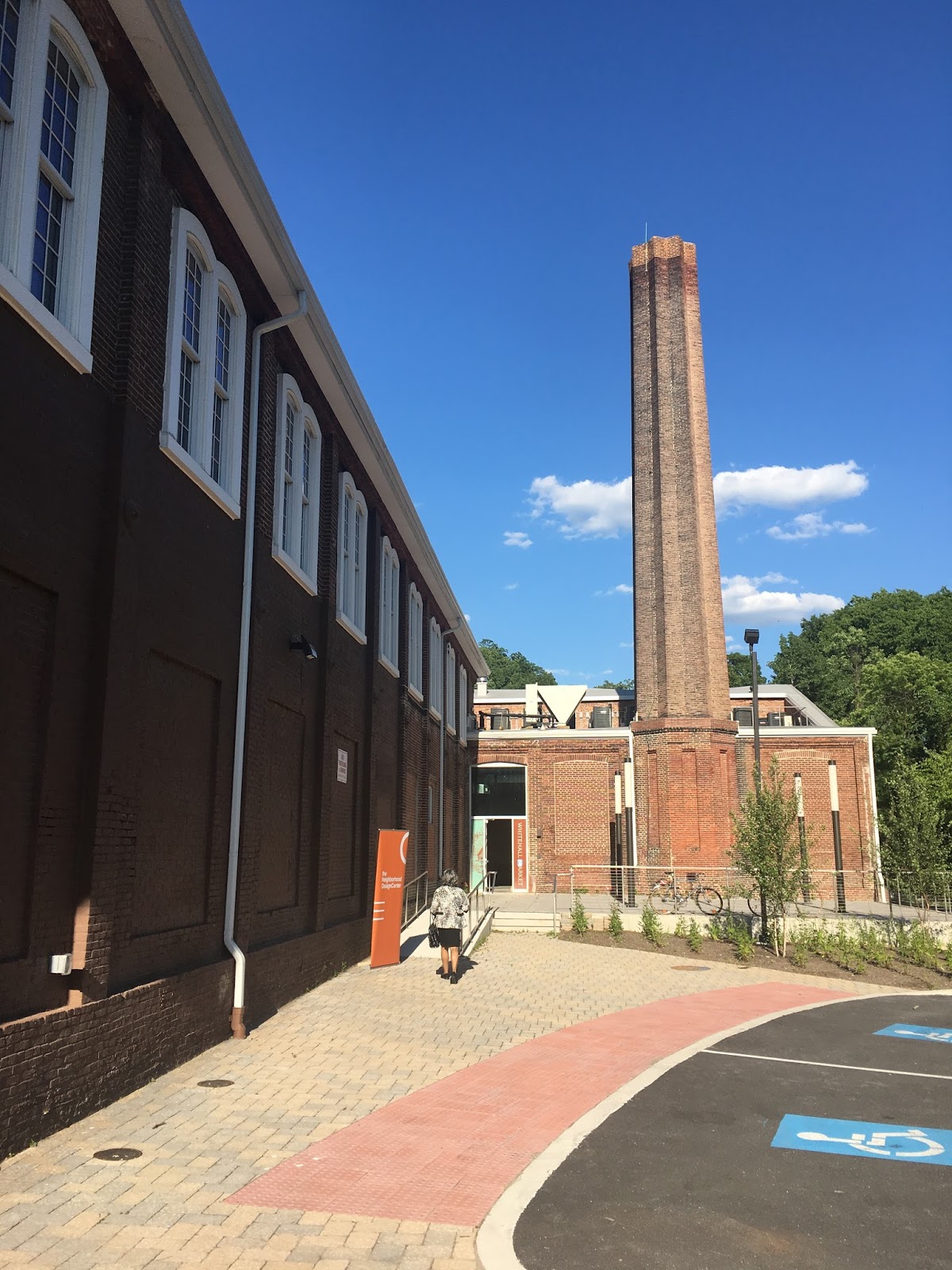
Whitehall Mill (Photo: Philipsen)

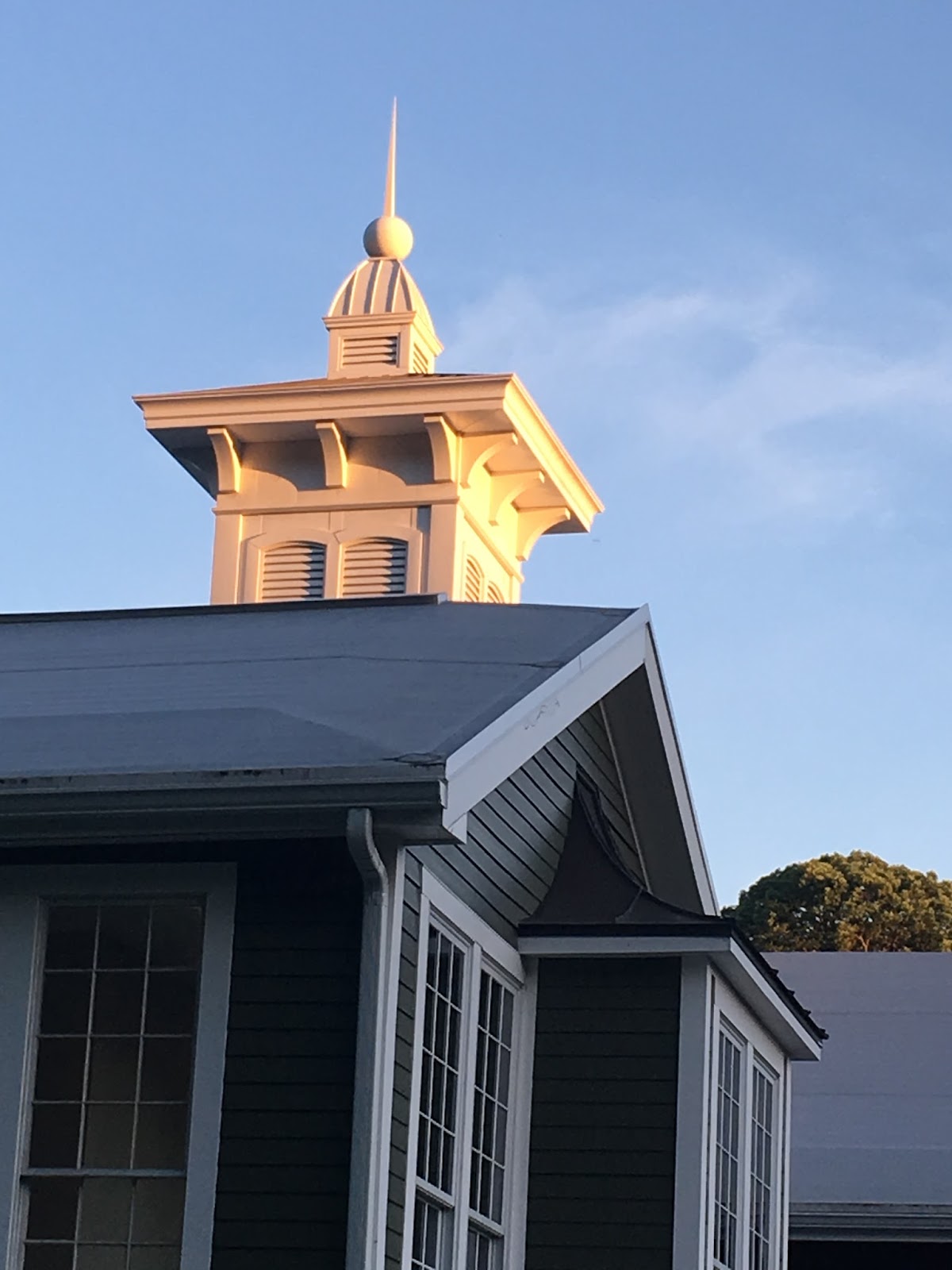
The Whitehall Mill just as Mill No 1 is developed by David Tufaro who has recycled old industrial Baltimore for years, initially together with Samuel Himmelrich and later alone. The mill was long overlooked as just another hulking brick structure and was one of the last mill structures not yet refurbished. It is now part of a the full complement of historic mills along Clipper Mill Road that Dan Rodricks once called the "other waterfront".  The oldest conversion is the Mill Center, an artist hub which Cho Wilks and Benn Architects converted in the early 80s, a reminder how long Baltimore has been an example of adaptive re-use of industrial buildings. Tufaro recently completed Mill No 1 (mostly apartments) and Seawall did Union Mill (teacher housing and cafe Artifact) to the north.

Whitehall is a 100,000 sqft development with office space (the offices of Mahan Rykiel recently moved in from their previous home at Steiff Silver, another industrial adaptive re-use building in the Jones Falls Valley), 28 apartments, a large space for a Whitehall Mill market that is envisioned to feature fresh foods and produce and a future restaurant.
Whitehall Mill is the historic renovation of the old Clipper Mill constructed from 1865 to 1875. Before the construction of Clipper Mill, an old flour mill named Whitehall Flour Mill resided on the location until it was acquired by Horatio Gambril and David Carroll. They transformed the flour mill into a textile manufacturer as a continuing trend along the Patapsco and Jones Falls. Other mills surrounding the Jones Falls were slowly acquired and eventually created the Mt. Vernon-Woodberry Cotton Duck Company, which held a relatively large portion of the cotton manufacturing done within the United States. (Website)
As Mill One, the place is nestled into the valley with lots of green around it and accessed by the scenic Falls Road winding its way through the valley. One can see the Jones Falls in a section where it isn't covered by the expressway that rumbles in the background beyond the light rail trains zipping by every so often.

The Mills sit in the floodplain of the Jones Falls and can only be developed when the City accepts development inside the  100 year FEMA flood-levels and the climate change related additional 2' "freeboard" mandated in Maryland which amount to a whopping 14' above the floor level of the space designated for the market. Tufaro negotiated the flood protection levels down to 7 feet and somehow the insurance and FEMA went along. The uses are protected by bricked up former windows and by flood gates similar to the ones the developer team used at the Whole Foods Market located along the Jones Falls in Mount Washington.

Tufaro clearly set on a future scenario where humankind will get a handle on torrential downpours which are expected to increase thanks of climate change. On the night of the presidential attack on history's largest and most comprehensive agreement ever, one cannot be so sure about that.

Below a picture gallery of the Whitehall Mill

Klaus Philipsen, FAIA

Reporting on this site will be less regular during the next 10 days due to travel

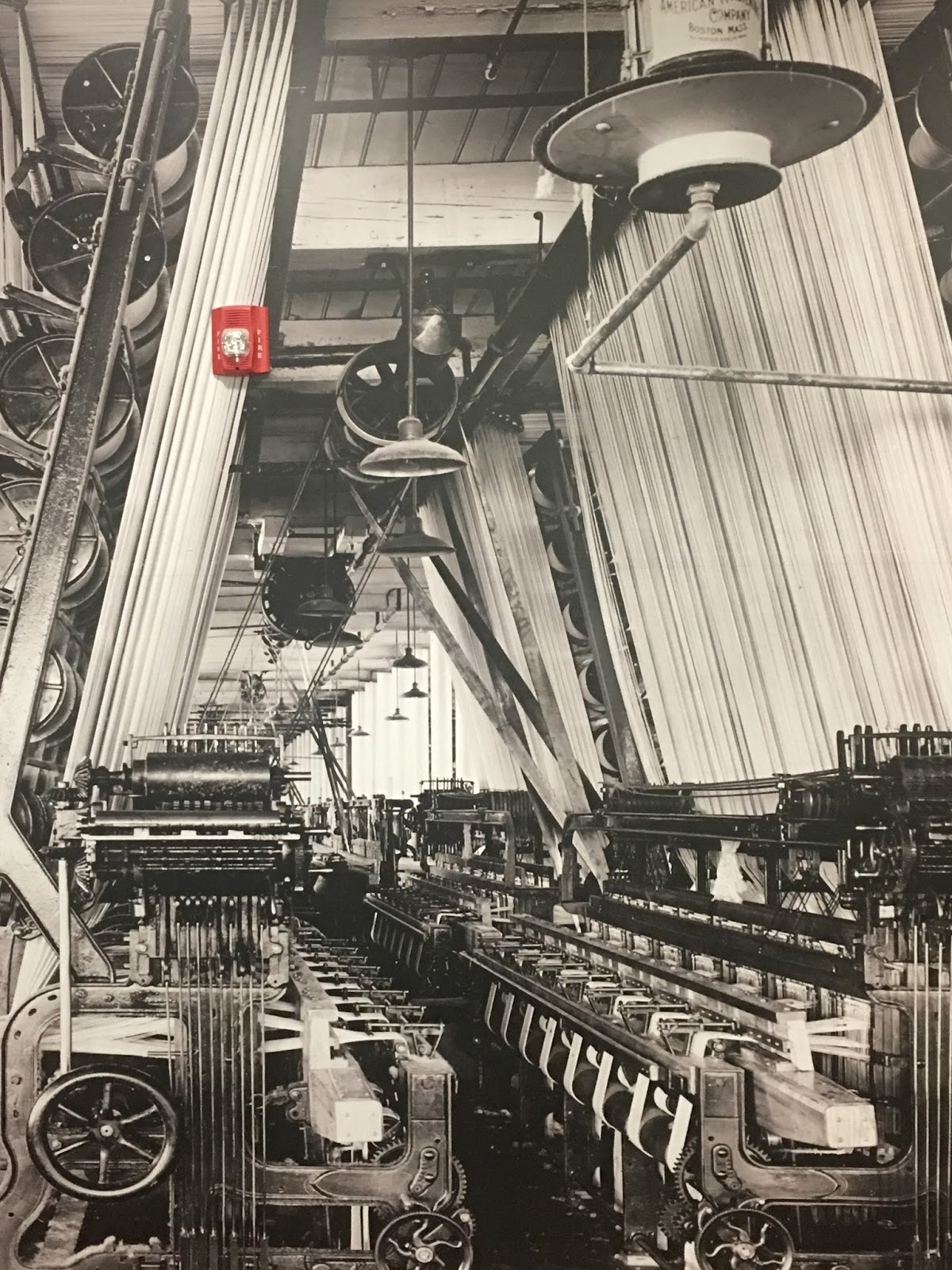
When Whitehall was a textile mill 

The westside of the Mill building after the renovation (Photo: Philipsen)

The Mahan Rykiel office: Open plan and lots of light  (Photo: Philipsen)

Office retreat corners for quiet thoughts (Photo: Philipsen)

The Mahan Rykiel office: Open plan and lots of light  (Photo: Philipsen)

The space set aside for the Whitehall Market (Photo Philipsen)

Cast iron columns and sprinkler retrofit

the charm of old factory buildings: Worship centers for making?  (Photo: Philipsen)

Protected from flood, closed lower level: Open plan and lots of light  above (Photo: Philipsen)
The book, Baltimore: Reinventing an Industrial Legacy City is my take on the post industrial American city and Baltimore after the unrest. 
The book is now for sale and can currently be ordered online directly from the publisher with free shipping. 


Thursday, June 1, 2017

Pugh caves on Canton bike lanes

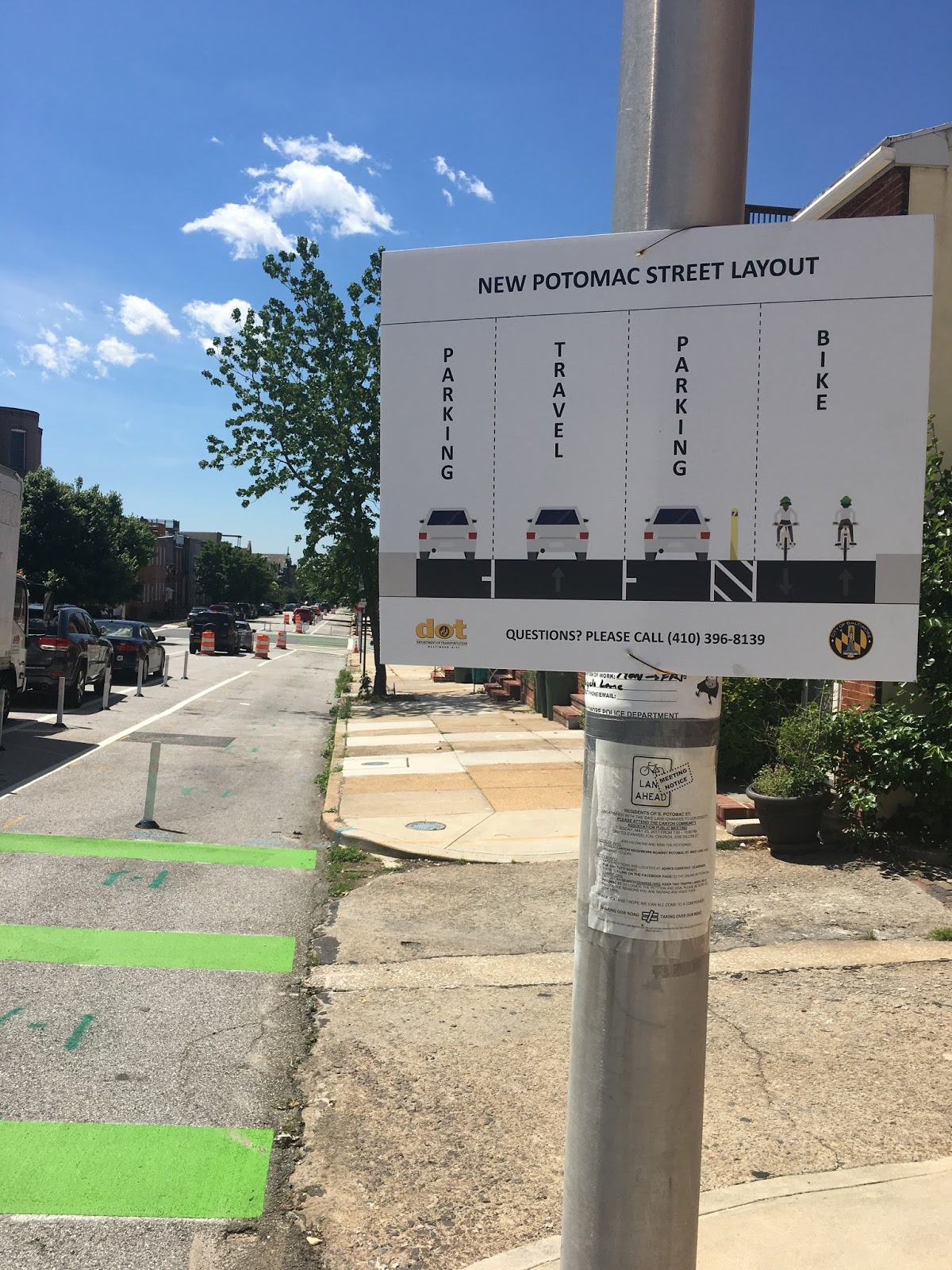
Canton residents scored a second victory in their Nimby wars against progressive transportation solutions. After opposing the Red Line for years residents there found a new target in local protected bike lanes already constructed in their neighborhood. The Mayor bowed to pressure from the well heeled community on Wednesday by deciding to reverse protected bike lanes on Potomac Street into unprotected bike lanes. The reversal comes in the name of the International and Baltimore Fire Code which calls for 20' wide lanes for fire apparatus. However, the Canton bike lane opponents hadn't campaigned on fire safety but parking:
Potomac Street before bike corridor installation
We, the undersigned, petition the City of Baltimore to stop the implementation of the permanent protected bike lane that will change S Potomac St from the 500 block to the 1300 block to a single traffic lane.  The implementation of this bike lane will result in a reduction of parking spaces and visually change one of the last scenic streets left in the neighborhood and to this we oppose.  We want to reserve and preserve this scenic byway.(Canton Petition May 2017)
The Mayor had to fight this battle without the benefit of a new Director of Transportation (The position has been open since she took office) and instead had to rely on former MDOT Secretary and County Executive Jim Smith, her current all- purpose weapon in the cabinet and the  Acting DOT Director, stalwart Frank Murphy, who was raised on a steady diet of cars uber alles typical for the decades he was in service in Baltimore. A letter addressed to the "Potomac Street Neighbors"and signed by Jim Smith, Chief of Strategic Alliances, states:
Mayor Pugh is committed to making Baltimore a bicycle and pedestrian-friendly multi-modal City, while at the same time ensuring that changes made to our roadways do not have serious negative safety and emergency response implications. In keeping with these joint goals, the Department of Transportation (DOT) was directed to re-evaluate the cycle track, which they have done.
Protected bike lane and buffer
The fire code seems to be a reasonable thing to consider, given that life safety always trumps everything else, until one can see how that code game is played in Canton where streets have been reconfigured for years to create additional parking by placing cars diagonally on one side of the street, frequently leaving less than 20' clear. Nobody objected then.

The letter continues:
Representatives from DOT and the Mayor’s Office met with bicycle advocates, Councilman Cohen, a representative of the Canton Community Association, and representatives of the Fire Department on May 25th to discuss this circumstance and a compromise was suggested. 
The "compromise" brings a reversal  of the protected bike lane for the segment of the road from Eastern Avenue to Fait Street and simply compromises accepted bicycle lane standards. The letter states:
"Compromise": exposed two way bike lane in a one way street
This section of road is too narrow for a curbside Cycle Track. Instead, parking will be allowed back against the curb and a two-way buffered and painted bike lane will be installed. Traffic calming measures will also be installed.
The implication is that emergency vehicles can use the bicycle lane as the added width that was missing to have 20'. Of course, the easy slide into the bike lane also invites drivers to do that when they pass parked vehicles or even double park in the bike lane for a short errand, all things that a protected bike lane which is buffered by a row of parked cars, prevents.

For Fait Street to Boston Street the 20' fire lane can apparently be achieved by making the protected cycle track narrower than originally planned and currently marked, i.e. below the width of accepted standards which are derived from how much space two opposing bike lanes need that have to dodge the curb and gutter and also opening doors from the parked cars. In short the Mayor sees no problem shortchanging bicycle standards in favor of the fire lane standard that nobody seemed to have cared about for years.
"Compromise":  Protected 3.5' two way bikelanes. Tough for bikes and
impossible for sweepers and plows
These blocks are wider than the first three, so we will retain a two-way protected bike lane against the curb. The bike lanes will be narrowed to 7 feet with a 1-foot crosshatch buffer. This will allow the necessary width for emergency vehicles. The bike lane will transition after Fait into this two-way protected bike lane. Traffic calming and painted buffers adjacent to the far parking lane will help to slow traffic and make it safer for all users of the road. 
DOT will begin the modifications with removal of the flex posts. Weather permitting, removal of the existing striping hopefully will be completed in the next two weeks. Striping and painting for the new configuration will begin immediately thereafter and is expected to take two weeks to complete. 
Residents between Eastern and Fait should begin parking against the curb immediately upon removal of the flex posts.
The letter closes with regret about past communications: "The communications and coordination regarding this project left much to be desired. Had there been better communication internally and in the community, this situation could have been avoided."

The outcome is regrettable and includes severe misunderstandings, including calling NACTO, the National Association of City Transportation Officials a "national bike advocacy organization" when in reality, NACTO was founded with the express purpose of reconsidering the many car-centric road standards promoted by AASHTO who has published "Roadside Design Guides" for decades.
NACTO, naturally, had already come across the 20' standard for fire apparatus elsewhere. The difference: Other cities adjusted the lane requirement provided in the model code to something they considered reasonable, given that an actual firetruck is only 8.5' wide. A ladder-truck with outriggers could get to a total width of 15.5'.
Original design, partly executed

Fire apparatus standards have been used for decades to justify all those super-wide suburban streets and oversized turn circles at the end of cul de sacs until New-Urbanist planners pushed back by pointing to the fact that many historic cities have existed for hundreds of years with much narrower streets than were built in the suburbs  and still could accommodate buses, trash trucks and fire apparatus. New subdivisions now get routinely built with 10' lanes in each direction and sometimes with 12'-15' lanes for one way streets. It is kind of ironic how historic Baltimore now gets hit with those old suburban standards that even the suburbs don't apply anymore. The 20' foot rule seems like a vestige of the old days that someone forgot to reconsider. However, single lane roads should account for the possibility that a vehicle is stalled or broken down and also allow larger vehicles to turn into the travel lane from a side-street, they have to definitely be wider than a standard 10' lane width. The Potomac Street plans show 11' lane width and 8' parking lanes (a parked car, usually around 6' wide, typically takes less actual space than 8').
Installed bike lane on North Potomac Street (Photo: Philipsen)

In a call to action to action Bikemore's Liz Cornish states:
The Potomac Street redesign is impractical. It does not meet National Association of City Transportation Officials or Federal Highway Administration standards for a high-quality, all-ages protected bicycle facility. The original design did. 
Bikemore has been working behind the scenes over the past two weeks to encourage the city to make a different choice at this crossroads between street safety and fire access.This is not a new issue. NACTO and other NACTO member cities have commissioned reports on this particular provision of International Fire Code and its applicability to old cities with street grids where almost no street meets the 20 foot clear requirement. As early as 1997, Oregon amended their state code to ensure that standards for the width of streets adopted by local governments superseded International Fire Code provisions.
NACTO believes the 20 foot clear rule to be unreasonable and incongruent with the goal of reducing pedestrian and bicycle injuries and increasing bicycle ridership. 
After consulting NACTO, we are unaware of any city in North America that has halted construction, or removed protected bike lanes, in response to fire access concerns. Once again, Baltimore City is prioritizing parking of cars over people, and wasting money redesigning bike infrastructure to be less safe—money that could be used to build facilities in other neighborhoods.
Signs explaining the current lanes on South
Potomac Street (Photo: Philipsen)

Cornish also ominously predicts that sections of Maryland Avenue, Baltimore's first protected bike-lane, may also be under review for redesign and that many other protected lanes envisioned in the adopted Baltimore Bike Masterplan maybe in jeopardy. The real danger of the Potomac Street decision isn't that particular street with its relatively low volumes of traffic, but the precedent it sets in this city and potentially nationally.

During a transition team event the Mayor was very friendly with the national symbol of courage for bike and pedestrian rights and safety, Janette Sadik Khan, the former transportation commissioner of New York. Sadik Khan was responsible for the conversion of Times Square.

At the time participants grew hopeful that the Mayor would enact a similar agenda in Baltimore. This early cave-in in Canton is very disappointing. Contrary to the Mayor's campaign slogan, her decision moves Baltimore backwards. 65 negative comments on her bike-lane Facebook entry all posted overnight make this very clear. One can be pretty sure that Sadik Khan or her former boss, ex mayor Michael Bloomberg would not approve.

Klaus Philipsen, FAIA

Objections to a single lane street (Photo: Philipsen)
From Fire Engineering: 
Ladder companies often face narrow streets with vehicles parked on both sides of the street. This is where you need short jacking. The driver/chauffeur, with the help of the officer and other members (who should be off the apparatus, in front and back, guiding the driver/chauffeur to the correct spot), should place the apparatus on the side of the street away from the fire building. Fully deploy the outriggers on the fire building side of the apparatus. This is the side over which the aerial will be used; the outriggers must be completely extended for aerial stability. If possible, try to place the fire side outriggers between parked cars or on driveway aprons. This can increase the aerial ladder's reach. On the other side of the apparatus, the nonfire side, deploy the outriggers out as far as you can. You will not be able to extend them all the way in a narrow or car-lined street. This is the short-jacked side