Monday, December 30, 2024

Where does Baltimore stand at the end of 2024?

Is the glass half empty or more than half full?

With the Red Line again moving further away from reality thanks to the envisioned Maryland budget crunch and the transit hostile new federal administration, the Highway to Nowhere grant not achieving a buildable solution that would qualify for round two funding (a submission was made anyway), the State Center dispute settled but no new development in the pipeline, the Port Covington (Baltimore Peninsula) development stalled at the initially completed stage, some of the bigger dreams for redevelopment seem to be unachievable. Baltimore detractors will take this list of the glass half empty as proof that the city is a basket case.

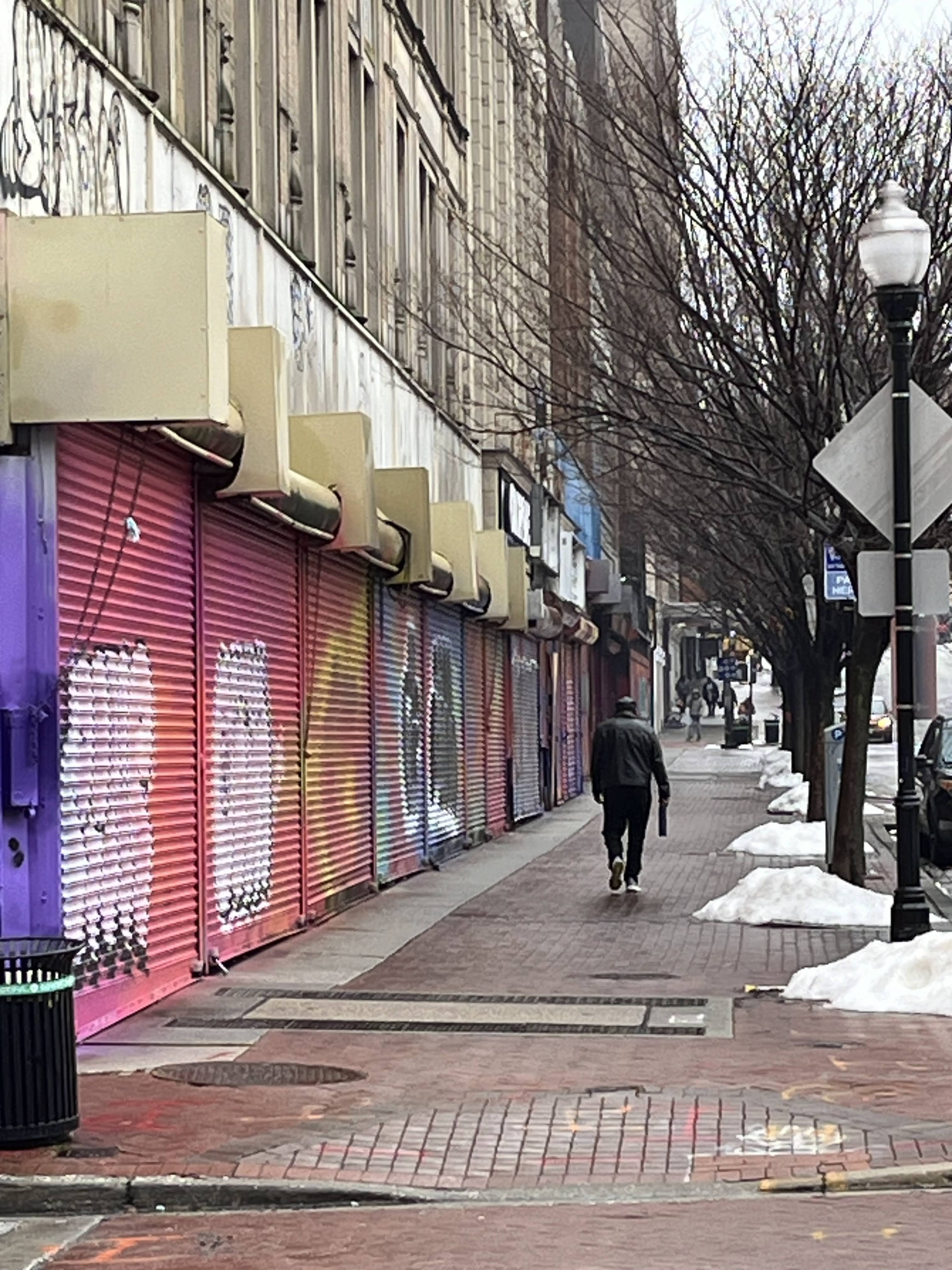
Insta-shot spot (all photos: Klaus Philipsen)
Yet, there is also a list for the glass half full people, and it maybe longer. Urban development on the plus side of the ledger is numerous: 

There is the redevelopment of the Mayors childhood place of Park Heights that has reached some critical mass at its core, buoyed by the prospect of Pimlico's redevelopment; in east Baltimore the Perkins Home redevelopment is completed in its early parts; Westport is under construction for its first phase, the redevelopment of the former "murder mall" housing complex on North Avenue is also underway; the Johnston Square redevelopment is progressing nicely, the so called "Westside" of downtown continues to see construction on Park Avenue and also on Howards Street; the multi-year reservoir construction in Druid Hill Park is finally coming to some conclusion; development in Highlandtown and Greektown has gone gangbuster, and even the Uplands development has gingerly approached its next (but ugly looking) phase. 

Under Armour's new headquarters is complete and parts of the redevelopment of the Insulator factory campus are already occupied. The Johns Hopkins university campus keeps getting re-built and the  Morgan University is continuing its unprecedented building boom with several new academic buildings and expanded student housing. Baltimore's schools continued to get renovated under a multi-billion dollar construction program and the Mayor cut ribbons on new and re-opened rec centers across the city. The new Frederick Douglass Tunnel construction has started with some preliminaries and one has to hope that the funding for the full project is secure.

"A city in perpetual recovery"

These lists are not meant to be comprehensive or complete, they rather illuminate the state of Baltimore as a city "in perpetual recovery" (a term coined by journalist Dan Rodricks who keeps up the progressive torch in a increasingly dark Baltimore SUN).

Westport groundbreaking

The state of Baltimore as a city that always seems right at the breakthrough but never quite gets to a place where things fall into place and a positive feedback loop gets underway. Instead, progress is still a heavy lift. That includes the many heroic efforts of finally breaking and tipping the endless loop of vacancies and abandoned row houses. Some of the measures put in place, such as the non contiguous TIFF, supposed to leverage funds for rehabilitation, are innovative but seem rather impractical.

 But the comprehensive effort of finally ending the infinity of vacant houses dragging down entire neighborhoods could finally succeed; the split tax bill which passed, taxing vacant houses higher than occupied ones, is one of the promising steps. In spite of lots of new housing, a revamped inclusionary housing bill and hotels bought by the City to house homeless Baltimore's housing crisis continues.

Downtown

While much what happens in neighborhoods finally looks promising, downtown is in a downward spiral. The sale of a 28 story tower for a bit more than $2 million (at tenth of what it fetched 10 years ago) is just one indicator for the decline of downtown as an office

The Mayor speaking about a 10 year plan for 
downtown

destination. Some blame the new class A office along the water in Port Covington, Harbor East and Harbor Point, but the truth is more complicated and is a malaise that has afflicted many cities across the US and even abroad, in part because of remote work and in part because modern office work requires much less space and will require even less once AI will replace many service jobs. 

Nothing less than an entire re-invention of downtown is needed and it stands to reason that the downtown of the future will look a lot like the downtown of a distant past before mono-functional office towers in which mixed use was the norm. As for many ailments, Baltimore has a plan but desperately needs sound implementation strategies.

Beyond real estate

Baltimore as a city of arts took a blow when Baltimore's office of promotion and arts (BOPA) was defunded by the Mayor. Station North and the other arts districts (maybe except Highlandtown) are limping. Yet, art and music are still striving in many galleries and venues and the various festivals have taken place as well. 

Baltimore's storied SUN paper is on a strange course after a take-over by the owners of Sinclair, with some continued investigative journalism combined with many just terrible opinion pieces and the uncritical inclusion of Fox45 pieces into the reporting. Yet, the online only Baltimore Banner continues to grow and shines with collaborative investigations with Baltimore's WYPR public radio station and the New York Times.

In spite of its image as a violent city, the murder rate is significantly down and the Mayor largely succeeded with his "squeegee kid" initiative. This kind of nuisance is much less widespread these days. The Mayor got re-elected and seems to have found his groove. Hopefully this will include stabilized departments which have seen too many heads depart, most recently at City DOT, a department that had made good strides in 2024 with a host of new highly qualified hires. Especially DPW seems to rain being a mess. 

MTA (a State agency) was hit hard by Covid; its future operations and investments will be challenged by MDOT budget cuts; but a young and determined leadership team has been pushing hard to have more buses and trains run on time. The result is trending in the right direction but still unsatisfactory, especially for Light Rail and Metro. The new Metro cars will go in service this year and will hopefully bring this system back on its feet. Instead of a new Red Line we will see a "Raise Transit" improvement of the east-west Blue Line with additional bus lanes and stop improvements. 

The Baltimore AIA Urban Design Committee 
organized a public conversation on
HarborPlace

HarborPlace

Readers of my blog know that I am not a big fan of the proposed tower redevelopment for the Inner Harbor. After the referendum passed 2025 will show if MCB has the wherewithal and capital to get the proposed $490 million development off the ground. One of the litmus tests will be the fate of the proposed $400 million public-space improvements that MCB sees as a condition for their development. Meanwhile this past holiday season saw a pretty lively Inner Harbor with about 60% of the lease areas of pavilions with some level of activity, the German Christmas Village and the ice skating rink and the undiminished attraction of the partly refurbished Rash Field and the Aquarium with its new floating wetlands. 

2025

The larger "blue" East Coast cities all better buckle up for a rough year with strong headwinds from Washington. Headwinds are also in store for "Liberal" universities and HBCUs, all important pillars of Baltimore's standing in the world. 

Baltimore may actually be most affected due to its proximity and dependence on the large federal workforce. Governor Moore's fondness for Baltimore ("it's Baltimore's time") and willingness to direct State funds here will continue to help, but can't make up for federal losses, nor do promises necessarily mean action (We will have to see about the Red Line). Even the Port will see headwinds thanks to the envisioned tariffs and likely reduced imports and exports. A good time to remember our manufacturing history and position the city for the planned renaissance of US manufacturing. 

Klaus Philipsen, FAIA 

Below a bunch of pictures I took throughout the year that show a Baltimore on the move, full of aspiration and also in need of even more investment. 

See also Ed Gunts 2024 summary in the Fishbowl with more detailed information about many projects   

https://baltimorefishbowl.com/stories/urban-landscape-baltimore-saw-construction-activity-in-nearly-every-part-of-the-city-in-2024/


Monday, December 9, 2024

AIA and BAF awards 2024

In October AIA Baltimore in conjunction with the Baltimore Architecture Foundation (BAF) celebrated the 2024 design awards with a dinner at the Chesapeake Shakespeare Theater. The design awards annually showcase the design skills of local architects and landscape architects. 

The type of awards given by AIA and BAF Baltimore 

Over the years the emphasis and approach to awards has shifted from a mere "beauty contest" of "design excellence" to also awarding architecture as good business, design for social equity, for historic preservation and awards to "future architects". Design Excellence awards are given only to projects that have baked in sustainability goals.  BAF further complements the array of awards with  an award that honors dedication to architecture in Baltimore, Black Women who build Baltimore, a People's Choice Award and a Publication Award given to an individual who creates publicly accessible works that celebrate or educate about Baltimore architecture, past, present, or future.

Here this year's award winners, starting with the traditional design excellence awards that were based on the selection of an out-of-town professional jury consisting four AIA members of  the Buffalo and Western New York chapter of AIA. 

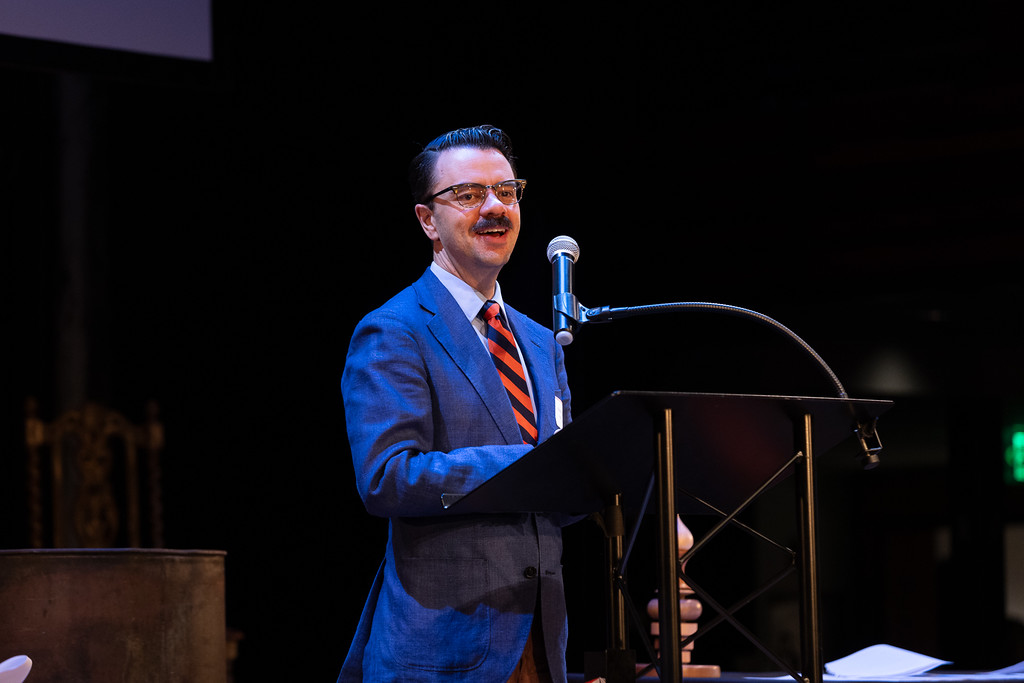
At the awards event Seth Amman, AIA of Arch & Type presented the design awards on behalf of the jury:

The Grand Design Award

The Grand Design Award went to Ayers Saint Gross for their Missouri Botanical Garden and Jack C. Taylor Visitor Center. The center also received an AIA Maryland Excellence in Design Honor Award earlier this year and was also recognized by IIDA Southwest with a Best in Show honor and a Design Excellence Award in Public Facilities.

Grand Design Award: ASG Missouri Botanical Garden
and Jack C. Taylor Visitor Center
(Photo: ASG)
The jury called the project " an elegant addition to the campus that improves the sustainable goals of the garden“ and is "both restrained and beautiful in its simplicity” with “wonderful use of natural elements inside to connect to the exterior gardens.” “There is a wonderful layering of spaces, from the entrance through the vertical main lobby to the gardens beyond,” the jury noted and commented on the building’s site integration which skillfully addresses accessibility challenges of a nine-foot grade difference, and the clear site plan and programming.


Design Awards

Design Awards also went to Ziger Snead Architects for the Steep Creek House and the Five Gables House. The jury was struck by the execution and attention to detail in Steep Creek
Steep Creek House by Ziger Snead (Photo: Ziger-Snead)

House. Immersed in the forest, the design does not compete with the landscape. They also lauded the  "subtle and elegant detailing' that "carries through the exterior and interior design of
Five Gables. The building massing and exterior detailing nods to the archetypical
farmhouse." 

A Design Award also went to  Design Collective Inc. for Aster and its focus on sustainability and shared amenities create an exciting project that activates the community it's sited within. The Aster development is part of the Route 1 transformation in College Park.

ISTUDIO Architects received a Design Award for the Arboretum Community Center in DC for setting a precedent how to extend the life of existing structures that may not meet the milieu for historic preservation and using mass timber construction to create a clear distinction between the existing structure and new. According to ISTUDIO's website the project exemplifies innovative design, sustainability, and community collaboration. As D.C.'s first mass timber building, it revitalizes a historic field house, merging preservation with cutting-edge technology to create a net zero-ready recreational space.
Ziger Snead: Five Gables House (Photo Ziger Snead)


The Michael F. Trostel, FAIA Award For Excellence In Historic Preservation

The award went to the Urban Design Group for the VIVO Baltimore which expands the concept of Historic Preservation by extending the life cycle of two International Style structures in downtown Baltimore. The jury noted the difficulties in reprogramming two hotel towers and the intrinsic value of creating spaces for worker housing in the city center. VIVO Baltimore is an excellent case study for other cities as buildings constructed as recently as 1974 qualify for historic preservation.

Honorable Mentions

Moseley Rosemont. (Photo: Moseley Architects)

An Honorable Mention went to Moseley Architects for the Rosemont, a rehabiltation of rowhouses in Rosemont in West Baltimore. As per Moseley's website the project "helped to transform the Rosemont community while working within tight budget constraints and navigating HUD and CDA requirements. The owner and residents’ desire for accessibility, a vibrant new aesthetic, and updated amenities shaped the revitalization of 106 townhomes".

Quinn Evans received an honorable mention for the Baltimore Museum of Art, Patricia and Mark Joseph Center for Education, SM+P Architects for the Crook Horner Lofts, Hord Coplan Macht for the Park School Science and Engineering Wing, Design Develop, LLC for the The Lot at The Urban Oasis (unbuilt), Hord Coplan Macht for the The Wren, and ISTUDIO Architects for the Kingman Island Environmental Education Center (unbuilt)

The BAF awards are listed below.

Roger D. Redden Award

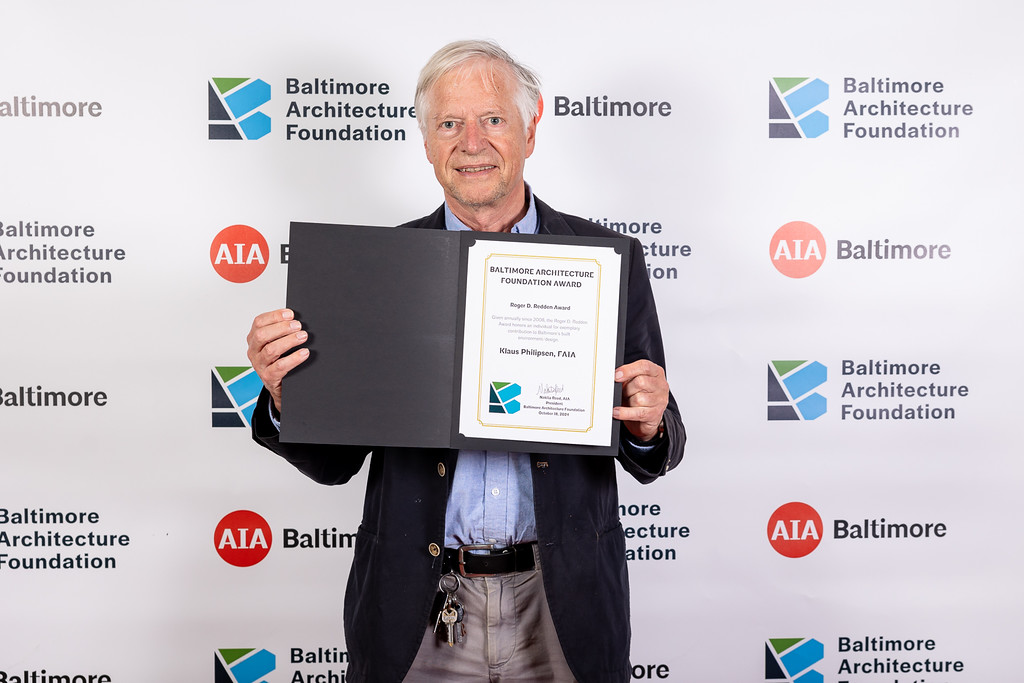
The Roger D. Redden Award is presented annually to an individual who has demonstrated a dedication to architecture and furthering its understanding in Baltimore. It was awarded to me.
as a founding board member of the 1000 Friends of Maryland,  the “D Center,” and as a past chair of the Urban Design Committee of AIA Baltimore and the national Regional and Urban Design Committee of AIA (RUDC). 
Klaus Philipsen, FAIA (Photo: Side A Photography)


Golden Griffin Award

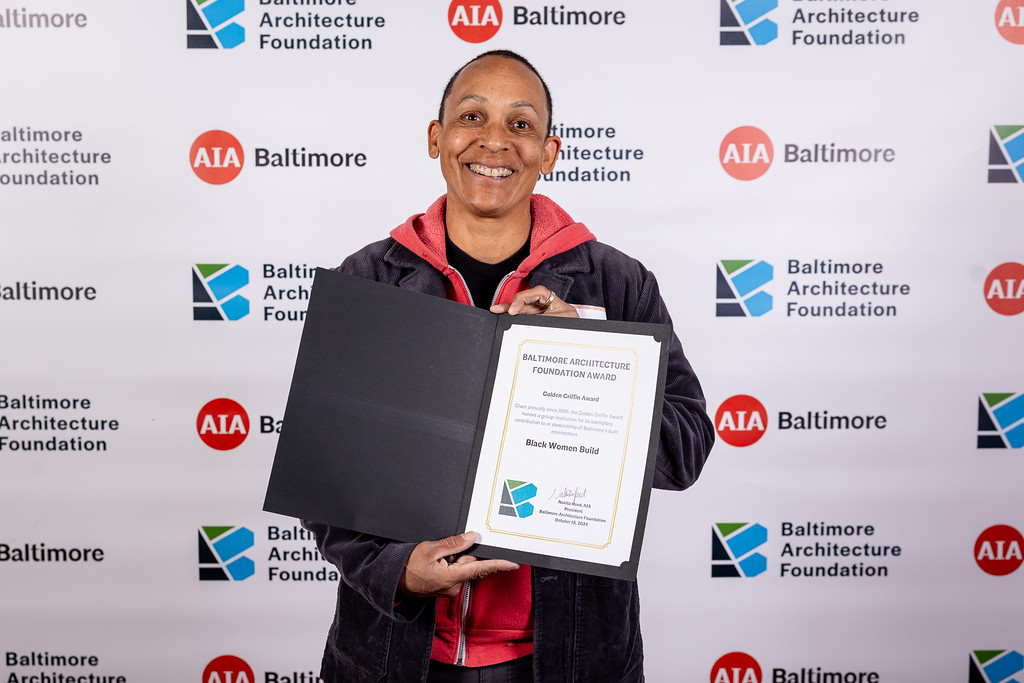
BAF’s Golden Griffin Award honors a group or institution for its exemplary contribution to, or stewardship of, Baltimore’s built environment. The Golden Griffin trophy consists of a stone from the Maryland Club salvaged from the building’s fire, and a gilded griffin inspired by those that grace the art deco landmark, former Baltimore Trust Company Building at 10 Light Street. The recipient of this award will keep this hefty reminder of their weighty contributions to Baltimore architecture for the coming year. The awardee is Black Women Build – Baltimore, founded in 2017 by Shelley Halstead who believes that for Black women to build intergenerational wealth, with the inherent security and prosperity it can generate, they must also learn the skills necessary to maintain that wealth. Home ownership and the ability to maintain that asset is one way this can be achieved.

BWBB purchases the ruins of old houses from the city for reconstructions. Since its start in 2019, the organization has rehabilitated 13 houses. To help keep their houses affordable, BWBB works with the Committee on Historical and Architectural Preservation (CHAP), which provides a 10-year tax credit on the property value increase resulting from rehabilitation work. In addition, Halstead is transforming other blighted buildings into social “third places” like a cafe and an art gallery.
Shelley Halstead accepting the Golden Griffin Award
(Photo:  Side A Photography)


Jim Dilts Award

The Jim Dilts Award was created in memory of author, Baltimore Sun newspaperman, and BAF board member James D. Dilts. As a founding member of BAF’s ‘Dead Architects Society’ Jim authored and edited many books, including A Guide to Baltimore Architecture. The Jim Dilts award is a monetary prize that is awarded to an individual who creates publicly accessible works that celebrate or educate about Baltimore architecture, past, present, or future. This year's award goes to Nick Redding and PreserveCast. Nick is the President & CEO of Preservation Maryland, where he has served since 2014, leading the charge to protect and celebrate the architectural heritage of Baltimore and beyond. Under his leadership, Preservation Maryland has grown significantly, launching programs such as Smart Growth Maryland and the Campaign for Historic Trades, which trains the next generation of preservationists in partnership with the National Park Service.

Nick is also the host of PreserveCast, a popular podcast that shares stories of preservation efforts from around the world, highlighting the importance of our history in shaping the future. His work not only preserves Baltimore’s architectural treasures but also educates and inspires others to take part in safeguarding our shared heritage. For his tireless efforts in making Baltimore’s history accessible to all, we are proud to present Nick Redding with the Jim Dilts Award.
 Nick Redding accepting the Jim Dilts Award
(Photo: Side A Photography)


People’s Choice Award

Emmanuel Episcopal Church – Moseley Architects
Photo by Kevin Weber/ Moseley


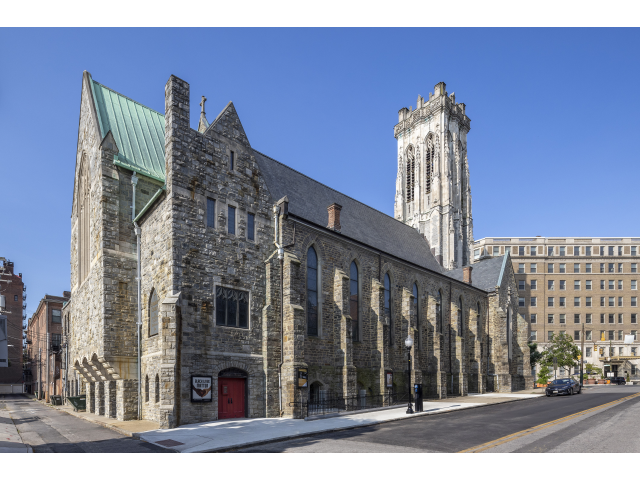
This award went to Mosley Architects the 1854 Emmanuel Episcopal Church renovation that connects the whole building via an elevator, provides accessible all-gender toilets, and adds a new exterior entry to the lower level. The renovation matches the quality of the historic building through careful use of materials. The resulting transformation keeps a historic building in active use and allows it to grow and thrive.


Future Architects Scholarship Awards

The (FAR) Committee created a scholarship program for students pursuing careers in architecture that awards design excellence. Winning projects demonstrate innovation, social responsibility, environmental stewardship, and critical thinking. The FAR Scholarship is a joint program between Baltimore Architecture Foundation, AIA Baltimore, and AIA National. This year's Undergraduate Student Design Award + Scholarship awardee is the Project 3 – Visitors Center by Lee Tomolonis of Morgan State University.

Lee’s Visitors Center  has a clear intent and strong concept that is presented in a playful and engaging graphic style. Hand-drawn vignettes were excellent companions to support the bold, stylistic renderings and lead jurors through this student’s thoughtful design process. Lee also showed an advanced level of landscape design, intentional inclusion of sustainable materials, and dedication to social equity. The pavilion for a “criminal” truly subverts the prison architecture it drew inspiration from.


The Graduate Student Design Award + Scholarship went to “Hydro Haven” by Evan Cage of Morgan State University.

Evan’s Hydro Haven is sensitive to its context while showcasing an incredible amount of research and technical knowledge. A thorough site analysis revealing flood patterns clearly supports the need for water harvesting on the site. Jurors were especially impressed by the knowledge of structural and MEP systems shown in wall sections and exploded axons, and the beautiful physical model included in the submission.

Klaus Philipsen, FAIA 
based on material obtained from AIA and BAF and firm websites. The article has been updated.

Monday, November 18, 2024

These Tiny Baltimore Homes are supposed to do a big lift

Can a bakers dozen of 10 by 40 foot houses end someone's homelessness, provide a healthy space to live, create a "village" network of collaboration and be a path towards building wealth, while also reviving a deserted Baltimore alley?

Hope Village on Holbrrok Street in Oliver (Photo: Philipsen)
This is the promise that Christian and Pam Wilson and their non-profit, Heart‘s Place Services chased for almost a decade. A heavy lift. The couple was joined by Stacy and Mark Sapperstein (thanks to Dan Rodricks columns about the Wilson's dream in the Baltimore SUN) and eventually (pro-bono) architect Randy Sovich who came to this project via the Neighborhood Design Center (NDC) . Through the years the vision took on various forms, from 8' wide steel shipping containers that originated with Mr Wilson's marine insurance background to modular housing to the conventional wood-framed "stick-built" house we saw at the ribbon cutting ceremony in early November this year. The ribbon cutting brought out the city's heavy hitters, including the Mayor, the Housing Commissioner and the State Senate president. 
Wrap around porch, side and front yard (Photo: Philipsen)

The officials dedicated 13 homes on what used to be 27 alley lots to a dozen applicants who had gone through a rigorous vetting process. Applicants, officials and onlookers toured the houses that feature a L-shaped porch, a living room, full kitchen, full bath and a small bedroom which can accommodate two beds.  11 days after the ceremonial opening no home is occupied yet, the finished homes still need the necessary use and occupancy permit (it will surely be issued, given that Housing Commissioner Kennedy attended the ribbon cutting) and a painter is pulling out all washer/dryer combos to touch up wall paint in the kitchens. One home is still waiting for a telephone pole to be moved so its rear and side siding and gutter work can be completed Reportedly it has no final designated taker yet. But other than theses small delays nothing stands between the new homeowners and a safe life: The houses are fully equipped with furniture, rugs, silverware, trash cans and even towels and a week's supply of food donated by Harris Teeter.  The front yards are landscaped, the side-yards are sodded  that will need some upkeep come spring. 

Senate President Ferguson at the ribbon cutting (HABC)

The 13 homes represent the Baltimore version of a concept that has been offered nationwide and in Canada as one of the responses to the housing crisis, the homeless crisis and the explosion of housing costs. The houses that are just a bit bigger than a single car garage are the extreme opposite of the trend to bigger is better of the last 70 years or so that has manifested itself in enormous SUVs and giant McMansions. Baltimore  tried the tiny house concept once before with a version that never matured beyond the prototype. Will these 13 homes open up a new era?

Cities that really have a space problem, New York and San Francisco come to mind, would indeed profit from a mindset that small is beautiful and the realization that home sizes have run amok while the number of people living in a household have steadily declined, but the last thing such cities need is a suburban freestanding home. In those cities the tiny house's urban sibling, the micro apartment, makes eminently more sense.
Meanwhile, in Baltimore, a village of tiny houses could be a way of offering the homeless a transitional structure that is better than a tent city. Those tiny houses, to be truly affordable, though, need to be stripped of kitchen and bath, the two most expensive items which in a transitional village should be located in a communal service center just like on a campground. (Community Architect, 2017)

Full kitchen with eating space (Photo: Sovich)
Houses without bath and kitchen would be transitional and not qualify for the accrual of equity by an owner. This especially ambitious Baltimore "proof of concept" straddles the minimum size of 400 square feet that the revised international residential building code (IRC) requires for a "tiny home", a classification that is commonly thrown around in the housing debate, but is terra incognita for permitting agencies, code officials, realtors and the lenders giving out home loans, in spite of the recent IRC and zoning revisions in most local jurisdictions. 

In 2016, we had adopted a tiny house amendment that would allow smaller footprint homes that are built slab on grade. ...the city zoning code does not allow tiny homes on wheels, but we do have the ability to build tiny smaller footprint homes, slab on grade (Alice Kennedy, Baltimore Housing Commissioner)

In spite of being grounded via footings and a concrete slab on grade (and not on wheels as some other tiny homes), no commercial lender was willing to lend the prospective owners the $25,000 sticker price

The bedroom is large enough for two beds side by 
side or stacked (Photo: Sovich)
for the home, even though the newly minted homeowners have the benefit of financial management counseling from the Hope Foundation and continued advice from the University of MD School of Social Work. This forced the Sappersteins to act as the private lenders in addition to the acquisition of the lots from the city for a $1000 per preexisting lot and carrying all of the actual construction cost (the homes cost five times the purchase price to construct). An actual construction cost is hard to come by since so much of materials and labour was donated by various vendors and companies thanks to Mark Sapperstein's good relations from his commercial projects.

Certainly the homes offer an attractive reprieve for those who were homeless. With an efficient heat pump, good insulation and the low mortgage the monthly cost would be tolerable even for people at 30% AMI or slightly below. The City offers to cover the closing costs  through a grant, provided the buyer stays in the home for a minimum of 5 years. Heating and cooling costs are further written down because the project used the Community Solar program to create off-site solar energy that get balanced with the actual usage in each home. The roofs were all oriented south for solar panel installation, however the community solar program was ultimately deemed to be more efficient and the only solar panel graces a small sheltered bench provided on the common ground that is slated to become a community garden. As houses are fee simple purchases, there is no HOA and no common ground as of yet. With the future community garden chances are good that a certain "village" feel among the new homeowners may emerge. 

13 homes are just the infamous drop in the bucket in light of the city's estimated 3000 homeless. Can the project scale up? Senate President Ferguson assumed as much in his ribbon cutting speech. But one cannot assume that all those donations would be available for future projects. How to scale is a question that developer Sapperstein asks himself as much as architect Randy Sovich who has started thinking about urban affordable infill housing more than 30 years ago. 

A precedent may come from our neighbors to the north, where the Canadian "Homes for Heroes" Foundation has villages for homeless veterans completed or underway in four cities.

Architect designed street numbers
(Photo: Philipsen)
A 2020 research from Home Advisor shows California as the most popular place for tiny homes, particular the small town of Landers which has a 28% tiny home share. 

Although the tiny-house movement is on fire culturally, the actual number of tiny homes out there is still quite small. Only a fraction of a percent of homes listed on multiple listing services qualify as a tiny home. (Realtor)

Key for any replicas would be a better relation between cost of construction and sale price. As any affordable housing builder knows, affordable units are not cheaper to build than market rate units. Smaller units are cheaper overall but the square foot price is actually higher. How can one achieve a drop in the cost of construction and open up other avenues than private charity to subsidize tiny homes in a similar way as other affordable housing? 

For cost cutting various possibilities come to mind: Shipping containers turned out to not provide the expected savings, but prefabricated panels may cut cost. Pairing two mirrored units as duplexes would save 40% of the exterior surface finish, wall framing and also energy and still allow the wrapped porch. A smaller bathroom as it is used in "micro hotels" may be cheaper. Getting the land for free or putting more units on the same amount of land would save some cost. (The Hope Village cut the original alley house density in less than half).  The biggest construction cost saving would come from scale itself. If various Baltimore CDCs would come together and develop a program of several hundred tiny homes scattered through neighborhoods in which previous small alley houses had been razed, builders could potentially see some of the same benefits they see in production homes by traditional home builders such as Ryan Homes or Lennar whose cost efficiency is the envy of every custom home builder. Plus the tiny house infill would restore the original Baltimore development patterns and fill the frequently not very useful alley green spaces

Some US states have started tiny home incentive programs, but Maryland is not yet one of those states. From financing to permitting and insuring, the path of the tiny home is not as well travelled as that of conventional homes and even with its new-found status in the residential code the tiny home still face many uphill battles. 

Covered bench with solar charged receptacles for
smart phones fabricated by Open Works
(Photo: Philipsen)

The trickiest question for the HOPE village in Baltimore's Oliver neighborhood is if these house will, indeed, create equity and wealth through homeownership. 

Now, 13 families have an opportunity to unlock generational wealth with long-term stability and equity when they open the doors of their $25,000 homes. (Baltimore Banner)

The wealth barriers that red-lining created are still present and the problems of depressed home values in disinvested and formerly red-lined neighborhoods likely affects tiny homes as well. It is unlikely that the $25k investment will put the new owners "under water" but whether a sale would recoup the actual construction cost remains an open question. Even though Oliver has seen investment and is considered a turn-around community, only time will tell if tiny homes would appreciate in value in tandem with the full size neighbors. 

Klaus Philipsen, FAIA

The article was corrected after its initial publication. The original wrongly named Johns Hopkins as tutor. The actual tutoring is provided by UM-Social Work. The original stated that the total construction cost was 10 times the sales price. The Architect corrected this to 5 times.

On this blog: 

Does the Tiny House solve a real problem? (2017)

Elsewhere: 

Tiny Houses as a stepping stone to end homelessness

Evaluating Tiny Houses as a Solution to the Housing Affordability and Environmental Crises

Homes for Heroes (Canada)

Tuesday, October 15, 2024

Who owns Baltimore's vacant houses and how to fix them up?

The first steps of a new $3 billion effort to acquire and repurpose thousands of vacant homes across Baltimore have begun with a state pledge and a package of bonds being considered by city lawmakers aiming to undo blight. (Baltimore SUN)
How removing thousands of vacants kept the total number of vacants the same

Baltimore's vacant rowhouses have vexed mayors for all the decades Baltimore has been a shrinking city. Their programs to eliminate vacant houses had colorful names: Mayor Martin O'Malley inaugurated his Project 5000 (or P5k) in 2002 and in 2010 Stephany Rawlings Blake created Vacants to Value (V2V). The SUN reported that "it took [O'Malley] two years to clear title to the first 2,250 properties. It took seven months to clear the next 33." Vacants to Value was adopted by Mayor Pugh as well ran on all the way to the current administration. The City website described the project this way:
Vacant lots and buildings in Sandtown (Photo: Philipsen)

Launched in November of 2010, Mayor Rawlings-Blake’s Vacants to Value initiative seeks to encourage reinvestment in neighborhoods impacted by blighted properties by strengthening code enforcement, promoting rehabilitation; streamlining the sale of vacant city property, and, by providing new, targeted incentives for homebuyers and developers who invest in vacant homes. 
Back then the number of vacant houses was estimated to be 12,500. Not that these programs didn't work at all, but for every rowhouse that was repurposed, one or more new vacant ones popped up due to continue
d deeply depressed property values in large swaths of the city combined with continued population shrinkage. As the University of Baltimore showed in various studies, even one or two vacant rowhouses can create instability and ruin housing values and livability on an entire block. It would stand to reason, then, to focus on stabilizing neighborhoods with those individual vacant houses, the so called middle housing neighborhoods. However, none of the programs used such an approach, instead, all aim for the biggest total numbers of eliminating vacants. 

Vacant houses are not only destabilizing neighborhoods, they also represent a huge amount of lost revenue for the City. In a 2022 report the Abell Foundation estimated these staggering numbers:
  • Vacants cost the city at least $100 million in lost revenue annually. The depressed value of vacant properties creates a shortfall of potential property tax revenue of approximately $50 million each year, with an additional $22 million loss attributed to the “contagion effect” on the value of nearby properties. The city could also benefit from at least $24 million in additional income tax revenue and over $12 million in additional water and sewer revenue if 15,000 vacant properties were occupied.
    The infamous "black butterfly" is clearly 
    visible on this city map of vacants
The number would be even higher if  one adds in the over 9,000 vacant land parcels where rowhouses once stood. The Abell report also mentions indirect costs:
The true cost of disinvestment and decline in the physical attributes of a city is far more than direct spending on maintenance and lost tax revenue, but these are the measurable aspects of vacancy. The broader costs to communities in terms of lost residents, public health impacts, and heightened crime are less measurable but very real. In Baltimore, these costs are also highly inequitable as they are largely borne by majority Black neighborhoods and Black homeowners. The economic value to the city of solving this problem is vast.
The State has been supportive in the efforts of reducing vacants as well. Even Governor Hogan, who had a rocky relationship with Baltimore City, sent a lot of money for Baltimore rowhouse blight removal under the name Project CORE (Creating Opportunities for Renewal and Enterprise). By mid 2021 CORE had spent some $123 million and eliminated 5,000 blighted units, mostly through demolition. In fact, there was so much demolition that some parts of West Baltimore today look more like green pastures (minus the cows) than an inner city neighborhood. Even before Mayor Scott the city tried various ways of generating funds for blight removal. Mayor Pugh tried a Neighborhood Reinvestment Fund which is still in place and reported a vacancy reduction of 40% in targeted clusters. 

In spite of all that, the number of vacant rowhouses remain stubbornly high and the revitalization of the most disinvested neighborhoods elusive. The number of vacant rowhouses today is given as 13,000, less than a tenth of which are reportedly owned by the City.  Overall, 7.2% of all residential properties were vacant and abandoned in 2022, 7.9% in 2010 and 8.2% in 2015nearly constant for over a decade, despite significant efforts to rehabilitate or demolish. .Equally constant is the magic number of 5000 units the politicians aim to remove with their programs; all the way to Governor Moore's new program.
City map of investment target areas (DHCD Dashboard)


The latest State initiative 

Now Governor Moore, his housing Secretary Day and Mayor Scott are ramping up a new effort with a combined $3bn State and City funds over 15 years that once again aims to bring 5000 unit into a productive future, including renaming Project CORE into the the Baltimore Vacants Reinvestment Initiative.  
“Right now, Baltimore has roughly 13,000 vacant and abandoned homes or structures and has more than 20,000 vacant lots. If we want to drive investment and we want to drive growth, we need to address the vacancy problem in Baltimore.” (Governor Moore)

The Baltimore SUN summarized the numbers: "Wes Moore set a goal of transitioning at least 5,000 vacant properties into homeownership or other positive outcomes during the next five years. Legislation passed in April pledges $50 million per year to the initiative, while state housing Secretary Jacob Day said Sunday that the state will fund an additional $27 million per year through a Baltimore regional neighborhoods initiative." 

The Mayor's neighborhoods TIF plan

Scott's overall housing plan has a few specific innovations, one of them a non contiguous tax increment financing district (TIF) that would leverage future tax revenues to finance immediate investments in neighborhoods. Two bills creating such as district and issuing bonds have been introduced. The idea is to generate $150 million over 15 years from TIF bonds. According to city hall, this is the first such TIF nationwide. State and TIF funds together will eventually add up to the $3 bn figure that has been batted around. 

At times it  seems as if anybody but the residents of Baltimore own the city. To date TIFs were mostly issued on behalf of corporations or developers who also routinely get large tax credits or concessions by swaying the Mayor, the entire City Council or the Board of Estimates, or all three. And then there are out of town private equity funds.

Higher taxes for vacants to suppress speculation

The Baltimore vacant house problem has a flavor that is not well known. The bad taste comes from speculative investors buying up cheap real estate and then flipping it to unsuspecting foreign buyers or just sitting on it doing nothing. Either way, the buildings don't get really improved. Many see this as a key reason why there are so many vacants, including those with aborted construction.
5 steps of intervention
(ReBuild Metro)


This year the Baltimore City Council finally took up the issue of slumlords and do-nothing speculators by proposing to tax vacant property at higher rates than occupied and used property. A bill was recently introduced and has the mayor's support and is co-sponsored by the entire council.

Foreign or out of town investors who buy Baltimore houses at tax sales or on the real estate market only to either "flip" them again, sometimes on the same day at a much higher price to unsuspecting far away clients or just hold on to them without doing anything are, indeed, doing nothing to turn the city around even if investment in general should be welcome. The bill to punish slumlords who sit on vacant property without investing with the expectation of some future windfall in the context of all the other activities aiming to reduce the high number of vacant Baltimore rowhouses is certainly a useful tool.

The far away investments are also troublesome because they are often based on deception or outright fraud. Buyers have been promised income from rents of tenants that don't exist because the houses have stood vacant for so long they are uninhabitable. Sometimes buyers receive proceeds form actual rents yet have still no idea that the house they bought is by no means prime real estate, not near the water but in the middle of West Baltimore, possible on a block where it is the only occupied one. 

Investors hoping some day they lemons would be valuable lemonade share one idea with locals: The idea that Baltimore cannot remain forever a laggard in urban development, population growth and prosperity and that one day its excellent location will prevail and the real estate mantra of "location, location, location" will finally come true. But their inaction makes this vision ever more distant. 

Long-term thinking isn't usually a speculator's strategy and so many of those rowhouse hoarders  stopped operation and subsequently leaving their buyers of useless homes hanging with nothing or, at best, partially started some renovations.
In Baltimore’s Harlem Park neighborhood, for example, just 53 of the 464 homes sold since 2017—12 percent—were purchased by owner occupants. In 2022, one of every five homes sold in the neighborhood (19.2 percent) was purchased by an out-of-state business, and nearly half were bought by in-state corporations with multiple-property portfolios.
“You just saw this backfill of corporate ownership come into this neighborhood, and it’s going to take years to come back from that,” Allenby says. Where real estate investors once focused on flipping houses for a quick buck, they now see rental properties as a long-term moneymaker. “These houses are just gone, likely in perpetuity, from a homeownership perspective.
” (Source)
On the scale it is occurring this behavior has a chilling effect on Baltimore's recovery. The Baltimore Banner devoted two stories on the phenomenon. 
How a small group of investors turned distressed Baltimore neighborhoods into profit centers.
The Abell study notes that about 25% of vacants are owned by corporations. While a reversal is urgently needed and higher taxes on vacant buildings can discourage speculation, it will not remedy the core problem that causes owners to walk away from their properties and let them sit vacant in the first place. The root problem is that the cost of renovation is higher than the value the house will have on the market, putting it "under water", a condition in which selling the house would not recover the investments made in it. In spite of the dreaded term of "gentrification",  discouraging speculation must be coupled with raising the value of all houses in a community until they are worth owning by systematically removing vacants block by block. This will also benefit existing homeowners and generate generational wealth. 

The solution?

There is no silver bullet to overcome the thicket of low market values from decades of racism, disinvestment, lack of services, liens for unpaid bills, and general neglect. The road to hell is paved with good intentions, and following this maxime unintended consequences line the path to revitalization. So do bad feelings. Communities lost faith, have no trust, fear gentrification and generally think that they are not heard and that whatever investments are not for them. 
Real time dashbord of Baltimore Housing (VBN stands for vacant 
building notice, the City's term for vacants)


Neither the City land-banking all the vacants nor complete reliance o private investment will solve the vacancy problem. Nor will large and stubborn investment in the vast areas of highest need (as the Enterprise Foundation tried) nor trickle investment as performed by many non-profits and community development corporations alone will work. 

The most successful undertakings seem to come from initiatives that Sean Closkey has spearheaded, first with Telesis and now with ReBuild Metro in Barclay and  Johnston Square. His comprehensive and neighborhood based approach can be summarized as being limited in scale, intensely local, relentlessly systematic, adjacent to strength, and equitably with the community. The ReBuild organization described the approach in detail in a 2023 report.

In summary: If the city can manage to get those new TIFs off the ground, if the State maintains its support funding, if the taxes on vacant properties succeed, and if the funds are used wisely, systematically and not in a scattershot manner, there could still be a chance to eventually revive the vast areas of disinvestment in West, Northwest and East Baltimore. 

Klaus Philipsen, FAIA

I have written many times about the problems and the potential solutions to the problem. 

  • Can the State save blighted communities in the City with $700 million? (2016) Here
  • Can demolition of vacants add value? here
  • One way to have fewer vacant rowhouses here 
  • Homesteading instead of flipping -The myth and reality of the Dollar House here